Peanuts are unique because they are not genetically modified. Learn about how a peanut producer is benefitting from FarmQA’s scouting solution.
It’s National Peanut Day, and we observed this day by learning more about peanut production from Dale Wells, Certified Crop Advisor for Cotton Services. With all his expertise in peanut production, Dale will tell you that his favorite way to enjoy peanuts is at a ballgame at Wrigley Field cheering on ‘Da Cubs.’
Dale provides advisement on plant fertility, determining which variety to plant, pest management, pesticide application, growth regulators, and harvest assistance. Dale’s expertise covers the early step of selecting seed and extends through the growing season to harvest to help growers any way that he can.
What is unique about scouting peanuts?

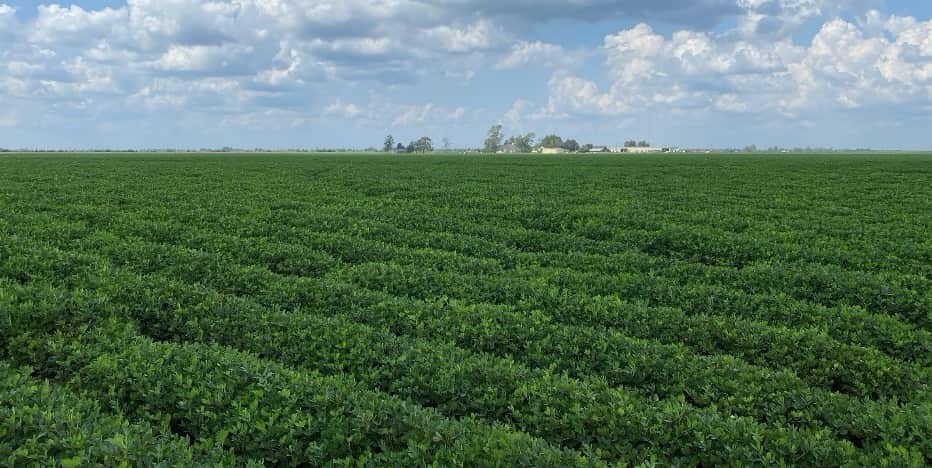
Peanuts are a relatively new crop for Dale in Arkansas, and he estimates they have been producing peanuts for five years. Dale will tell you that peanuts are unique from other crops because they are not genetically modified.

By contrast, growers of GMO plants have access to more combinations of herbicides and pest control. Peanuts are conventional, which means they are very limited on the herbicides that can be used and the production practices. Another difference is that the other crops that Dale works with are above ground, but peanuts grow below ground. Peanuts aren’t a true nut; they are actually a legume like a soybean. The process is to let them grow, dig them up, flip them over, let them dry three to four days, and then harvest them off the ground with a combine.
We asked Dale a few questions to learn more about agronomy services in the peanut world and his use of FarmQA.
Has the pandemic impacted your relationship with growers or changed how you do business?
The recent pandemic has not had a significant impact on our relationship with growers. Practices were already
in place for sanitization, but now you might notice the CDC guidelines posted in their shop, and meetings are
now via Zoom instead of in the field.
How has using FarmQA changed how you provide agronomy services?
It is a lot easier to have everything in the app and accessible from a phone or a tablet and not have to deal
with paperwork. Growers can see the scouting reports much sooner now, and
they see what the recommendations are as soon as we are done scouting their fields. Previously, the grower would
have to wait until the end of a day and the scouts provided a summary sheet. Now growers can watch the
scouting activity as it is happening in FarmQA. They can call us while we are still in the field. This
allows us to be more efficient.
Have your growers acknowledged this change?
The more tech savvy growers are liking the transition. Some of our growers still prefer us to text them
directly. They are focused on their crops right now and not on learning new things. Over the winter, we will
look at what was done, and examine how the growers can take more advantage of the new technology. It hasn’t
been an issue in peanuts, but we have had herbicide damage from neighbors on our other crops and capturing the information and photos in the scouting reports has been
something that the growers really like. It’s a great way for the growers to keep a record of such events.
What are you looking for when you are scouting peanuts?


We are visually looking at the crop to see the growth stage and how the leaves look, we are specifically
looking for disease. We use a sweep net to sample for insects. We sweep the plants to look for worms or
other critters that could be hurting the peanut crop. One pest that gives us a problem in peanuts is the
potato leafhopper. This insect causes a condition known as “Hopper Burn” in the leaves. We can sample an
area in the field and if there is a potato leafhopper problem, we can then show that damage in the scouting
app by drawing the area on the map and alert the grower to the
location of the problem.
What made FarmQA stand out from other options?
FarmQA is a good value and I liked that I can create my own templates and use my procedure on all the crops.
I liked that FarmQA shows a map of my fields and I can show the scouts where they need to go. The color coding to show what crop is planted is useful for my scouts.
The main thing is that it takes out all the paperwork. I remember previous years that included long days in
the field only to come home to need to finish paperwork that was time sensitive for my growers to react to
the advice that I was providing.
What features sold you on purchasing FarmQA?
My favorite feature is the ability to create a scouting template exactly how I want my fields to be scouted.
Reducing the paperwork and being able to see the scouts in progress. Growers don’t have to wait until scouts
leave the field and I don’t have to call them on a radio to have them walk me through what they did or
didn’t do. Instead, I can look at the reports submitted in FarmQA.
Would you recommend FarmQA to others? What’s the main reason?
I have already recommended FarmQA to a few people in my area and once the growing season wraps up we plan to
dig deeper into how I am using FarmQA. My primary reasons for recommending FarmQA was the reduced paperwork
but also how it simplified bringing new scouts on. The navigation in the app that shows where the current
location of the scout is very helpful. I have heard horror stories of someone scouting the wrong field all
summer and they could not understand why they could not get control of the insects even though they were
spraying. With the FarmQA Scouting app, the scout can look at their phone and make sure they are in the
right field by seeing their location on the map.
What about FarmQA surprised you the most?
I was most surprised by how quickly growers can see the scouting reports. Growers can login and see as soon
as a report is submitted. There are times that I would prefer to review his scout’s work to make sure they
are providing accurate information for the growers.
Do you have any closing comments for National Peanut Day?
We just started digging up the fields to allow the peanuts to dry for harvest. The week of September 14 is
when we will start harvesting the peanuts. I think we will have a good crop with a high value this year.